Most couples spend months choosing a venue, a dress and a colour scheme. Then they sit down to write the invitation and find there is no template that fits.
That is particularly true for multicultural couples. When your wedding brings together two families from different cultural backgrounds, two sets of traditions and sometimes two languages, the invitation becomes a real decision. It is the first thing guests read. It sets the tone and builds the anticipation.
Here is what to think through before you start, including some things beyond the invitation that most couples do not consider until it is too late.
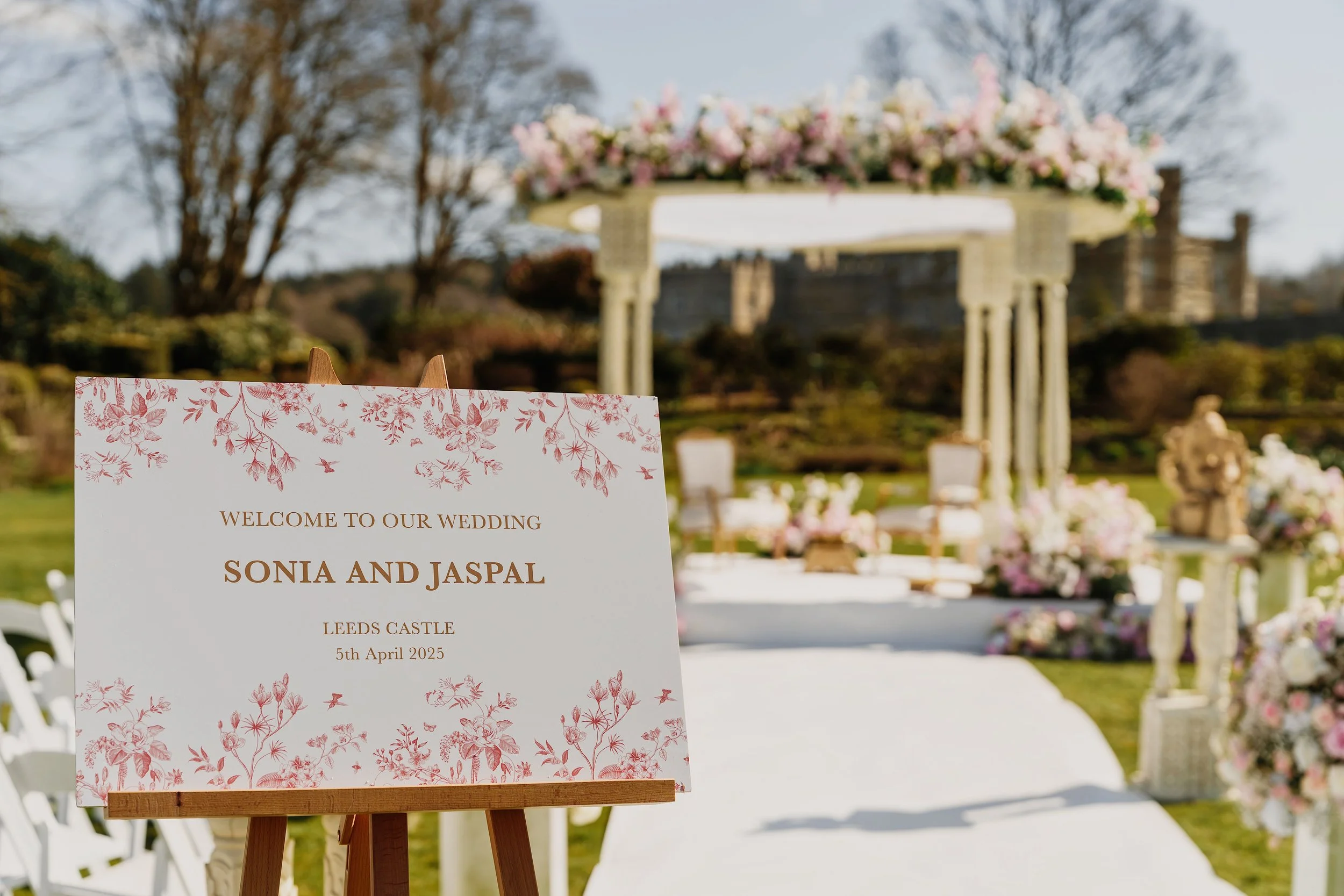
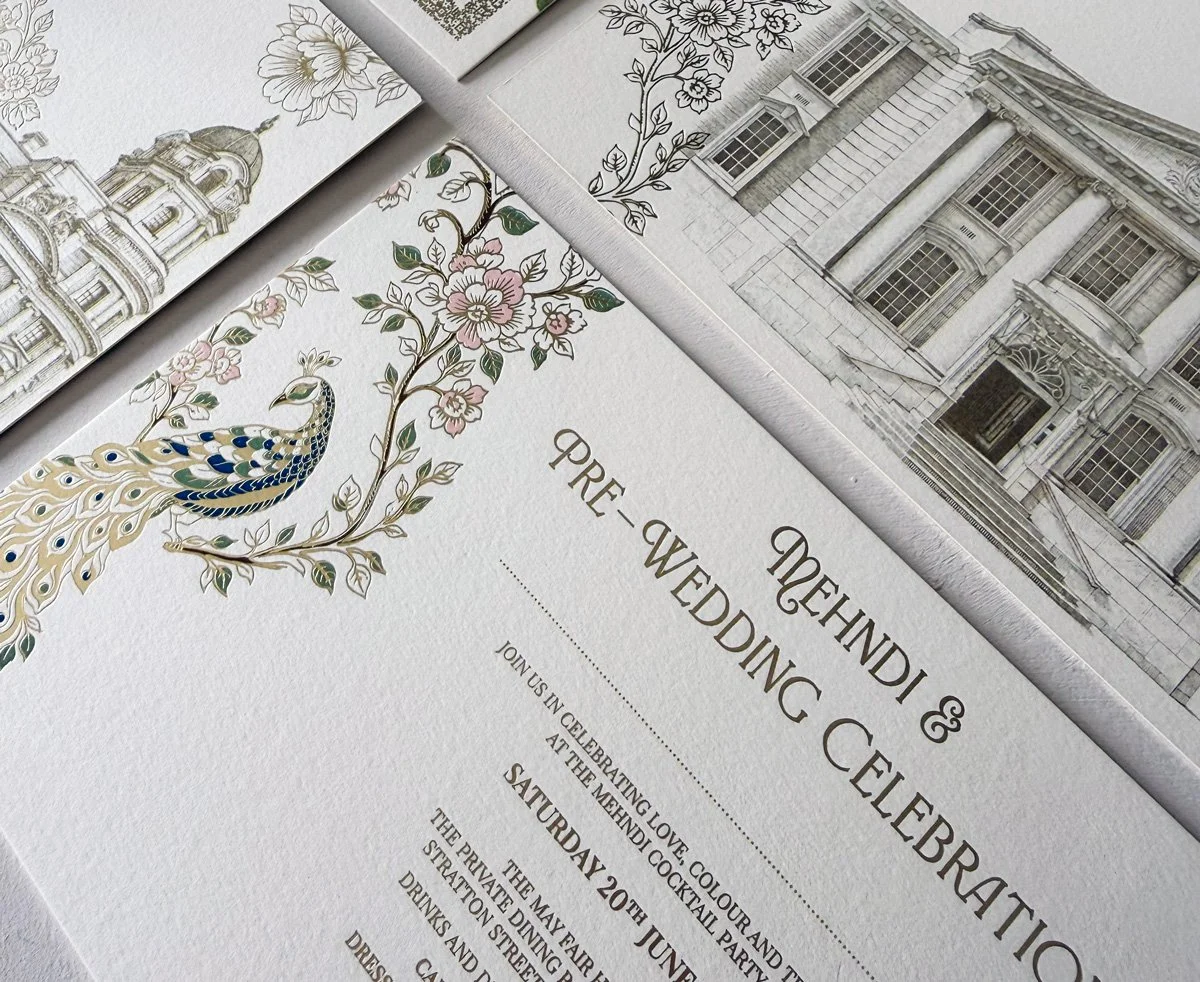
Bespoke multicultural wedding stationery suite by Ananya | Photography by Rahul Khona
FIRST, A WORD ON SPELLING
One of the first things multicultural couples want to check is the spellings of ceremony names. Is it Mehndi, Mehendi or Mendi? Nikah or Nikkah? Baraat or Barat?
All are correct. There is no single authoritative English spelling for many of these ceremony names, which is why couples see different versions on different wedding websites and start second-guessing themselves.
The answer is simple. Choose the spelling your family uses and apply it consistently throughout your entire stationery suite. We will design around whichever version you bring to us.

Elephant Royale bespoke wedding invitations by Ananya | Hayley Gell Photography
start with your ceremonies, not the card
Before you think about wording, list every ceremony or event your guests need to know about. A multicultural wedding might include a Mehndi, a Sangeet, a Baraat, a civil ceremony and a reception. Not everything belongs on the main invitation card. Some ceremonies will sit on enclosure cards or form part of an information suite.
Deciding what goes where shapes how the main card reads. Trying to fit everything onto one card often results in a design that does not do justice to either tradition. Our multicultural wedding invitations page shows how we approach this.
WHOSE NAMES GO FIRST?
There is no universal rule.
Traditional British wedding invitations name the bride's parents as hosts. Many South Asian invitations name both families jointly. Hindu wedding stationery often lists the groom's family first on cards sent from that side. For how Hindu wedding invitations are typically structured, see our Hindu wedding invitations page.
For multicultural couples, listing both families jointly as hosts is the most common and graceful approach. Have that conversation early, before the design process begins rather than after
LETTING YOUR STATIONERY CARRY YOUR FAITH AND CULTURE
The invitation wording does not have to do all the work. Stationery is one of the most underused ways to reflect both faiths and cultural identities across an entire wedding.
Certain words can appear in a second language without needing translation. A table plan that uses the word "Mehman" rather than "Guests." A menu card that names a dish in Hindi and English. An order of service that carries a line of scripture from both traditions. These are small decisions with a significant effect on how welcomed guests from both sides feel when they arrive.
The design itself carries meaning too. Motifs, colour choices, paper finishes and embellishments can represent each tradition visually, which allows the words to stay cleaner. Our guide on choosing the perfect colour palette for your wedding invitations is a useful companion here.
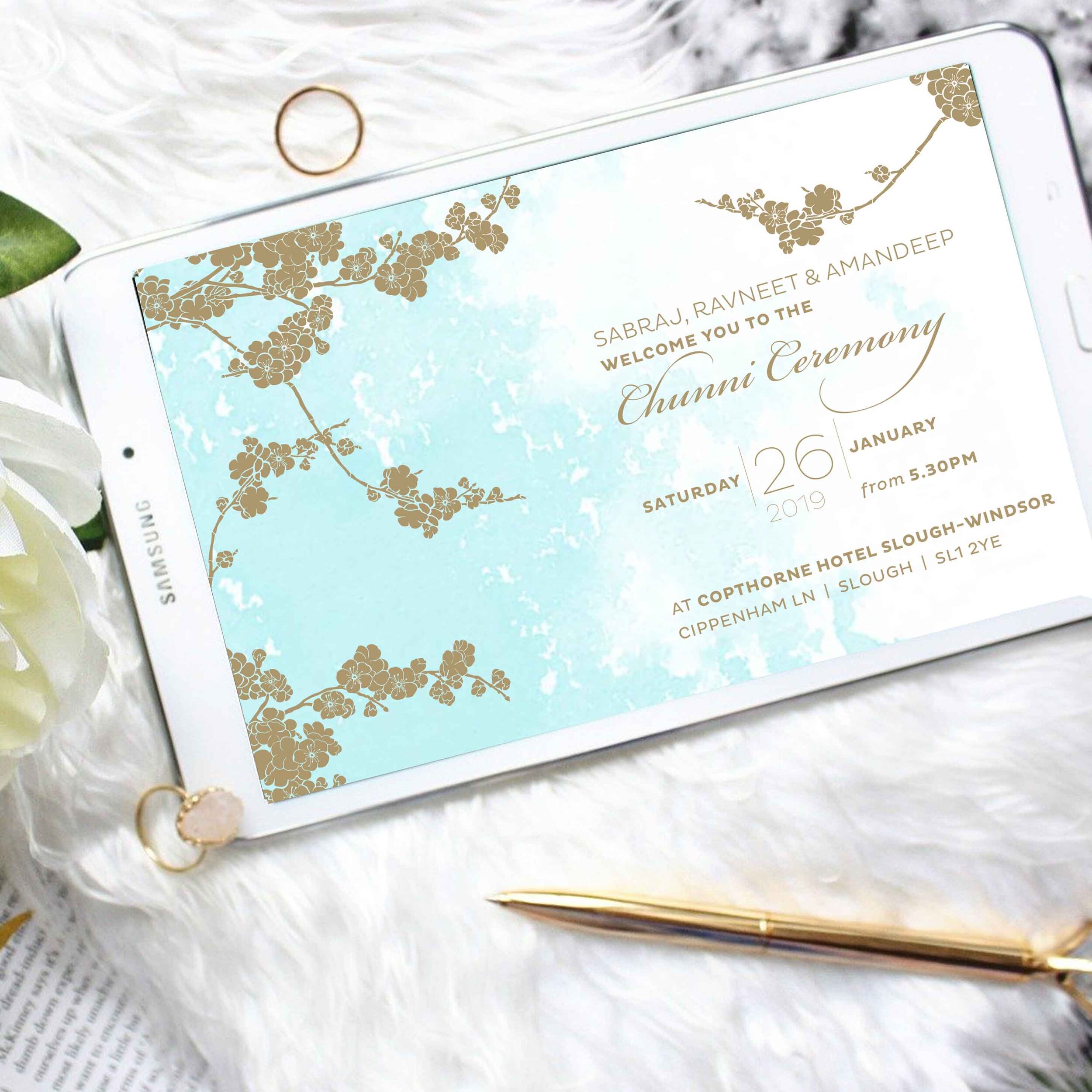
Digital cherry blossom invitation for a Sikh wedding by Ananya
BEYOND THE INVITATION: ON-THE-DAY STATIONERY
This is where multicultural couples have the most creative freedom and often the most fun.
One of our favourite commissions was for an Indian-Scottish wedding. Their pre-wedding event was called Tartan Turbans, combining Scottish dancing with a henna party. The name alone said everything about who this couple was and what the day was going to feel like. At the reception itself, rather than a guest book, they had a wish tree. Vibrantly coloured wish tags representing the richness of the Indian celebration were tied with tartan ribbon for the Scottish side. It was specific, joyful and completely theirs.
That same spirit can run through an entire suite. Cocktail menus are a wonderful opportunity. A Mango Lassi Spritz. A Chai Old Fashioned or a Whisky Negroni with a turmeric twist. Naming cocktails with a multicultural nod gives guests something to smile at before they have even had a drink.
Table names are just as powerful and almost always overlooked. Couples often default to numbers when they could choose cities that mean something to both families. Mumbai and Edinburgh. Dubai and London. Delhi and New York. Or they name tables after shared traditions, favourite foods or places they have travelled together. Guests remember it for years and it costs nothing extra to do.
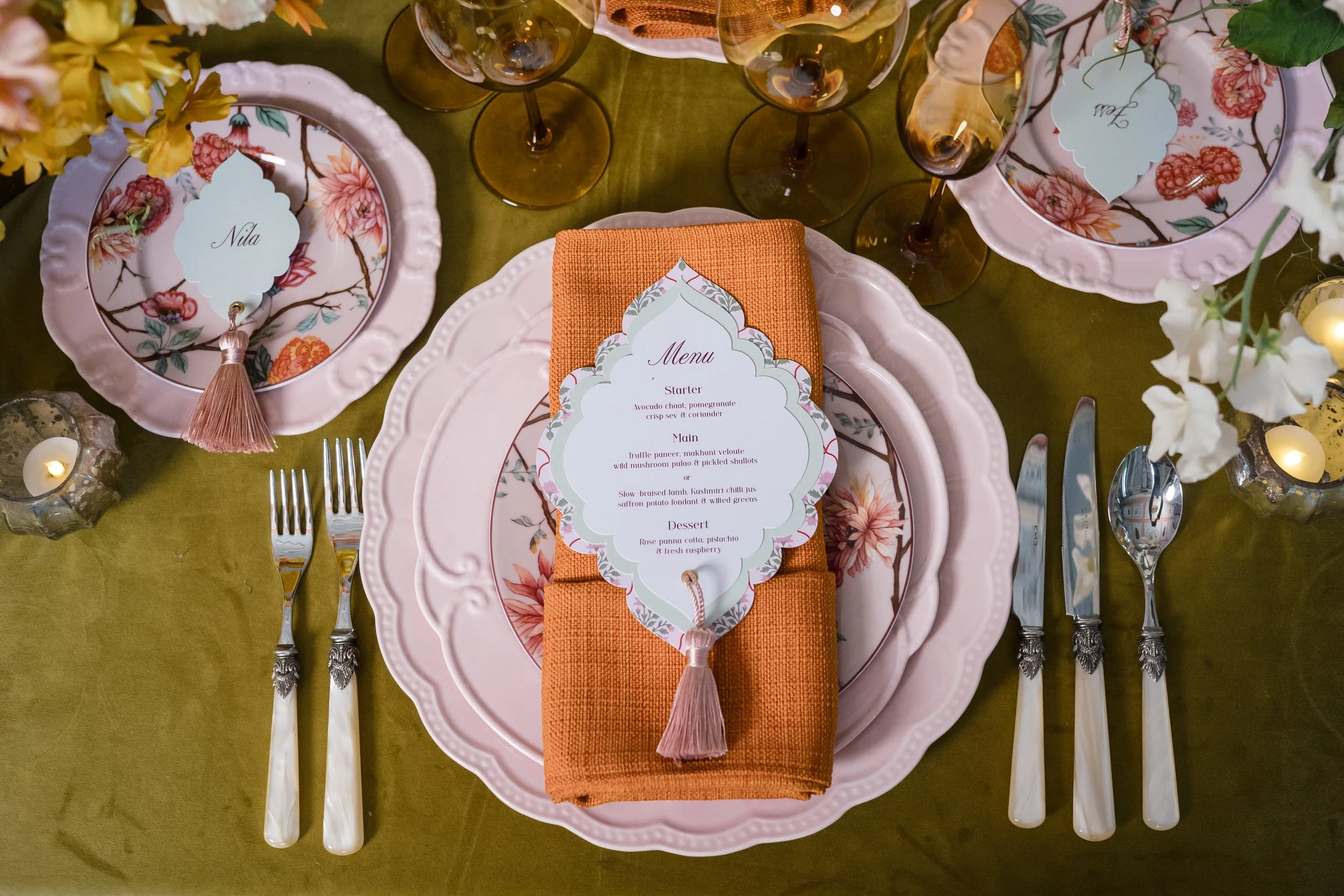
Multicultural wedding menu by Ananya | Photography by Muse
For all of this to work together, the suite needs to be designed as a whole from the beginning rather than added to piece by piece. Our essential wedding stationery guide covers everything from save the date to on-the-day pieces, and our guide to planning a multicultural wedding in five steps covers the broader planning picture.
For Sikh wedding stationery our Sikh wedding invitations page covers the specific considerations, and for Muslim wedding stationery including Nikah wording, our Muslim wedding invitations page is the place to start.
For a useful reference for cultural and multicultural weddings, Khush Magazine is a thorough and well-regarded resource.
Until next time,
Vaishali x
FREQUENTLY ASKED QUESTIONS
Is it Mehndi, Mehendi or Mendi?
All three spellings are widely used and all are correct. Choose the version your family uses and apply it consistently across your entire stationery suite.
Can a multicultural wedding invitation be in two languages?
Yes. Bilingual invitations work well when designed carefully. A dual-sided layout or two separate cards give each language room and avoids the card feeling crowded.
Whose parents are named first on a multicultural wedding invitation?
There is no fixed rule. Many multicultural couples list both families jointly as hosts, which ensures neither family appears secondary.
Do I need separate cards for each ceremony at a multicultural wedding?
Not always. One main card works well for couples hosting a single ceremony and reception. For weddings with multiple ceremonies across different days, an information suite with enclosure cards is clearer for guests. Your stationer will be able to guide you.
How far in advance should multicultural wedding invitations be sent?
For weddings with international guests, 2-3 months in advance of when you require the RSVPs is recommended. Save the dates should go out earlier still, particularly for multi-day celebrations.
What is the best wording for a multicultural wedding invitation?
The best wording reflects both families equally, names all ceremonies clearly and uses a tone that matches the couple rather than defaulting to one family's tradition.