

At Ananya Cards, we work with couples planning multicultural and destination weddings, bringing together different cultures, traditions and family expectations.
We asked the team at UK Linkology to put together this useful guide for our couples, looking at how to approach the conversation around prenuptial agreements when different families, cultures, faiths and expectations are involved.
It’s an important conversation that may not always be easy to have and starting it early can make all the difference. While every couple’s circumstances are different and legal advice should always be sought where appropriate, we hope you find this a useful starting point.
Raising a prenuptial agreement can feel awkward in any engagement. Add two families with different expectations about money, marriage and who gets a say, and it becomes harder still. What one family sees as sensible planning, the other may hear as an accusation.
There’s no perfect script for the prenup conversation, but there is a sensible order. Work out what you want, talk to your partner first, agree how you’ll involve both families, then get the legal drafting right.
• Start the conversation months before the wedding, not weeks before it.
• Be clear about what you want the prenup to protect.
• Agree with your partner how and when you’ll involve each family.
• Get separate legal advice and allow enough time for proper negotiation.
GET CLEAR ON WHAT YOU ARE ACTUALLY ASKING FOR
Before raising a prenup with your partner, be clear about what you want it to achieve. Prenuptial agreements aren’t automatically binding in England and Wales, but courts can give them significant weight when they’ve been entered into freely, with both people understanding the implications.
Be specific about what you want to protect, whether that’s a property you already own, a future inheritance or a share in a family business. “My parents helped me buy the flat, and I’d like us to agree what happens to it” is a much easier conversation to have than “I want to protect my assets”. The clearer you are about the reason for the agreement, the easier it is to discuss.
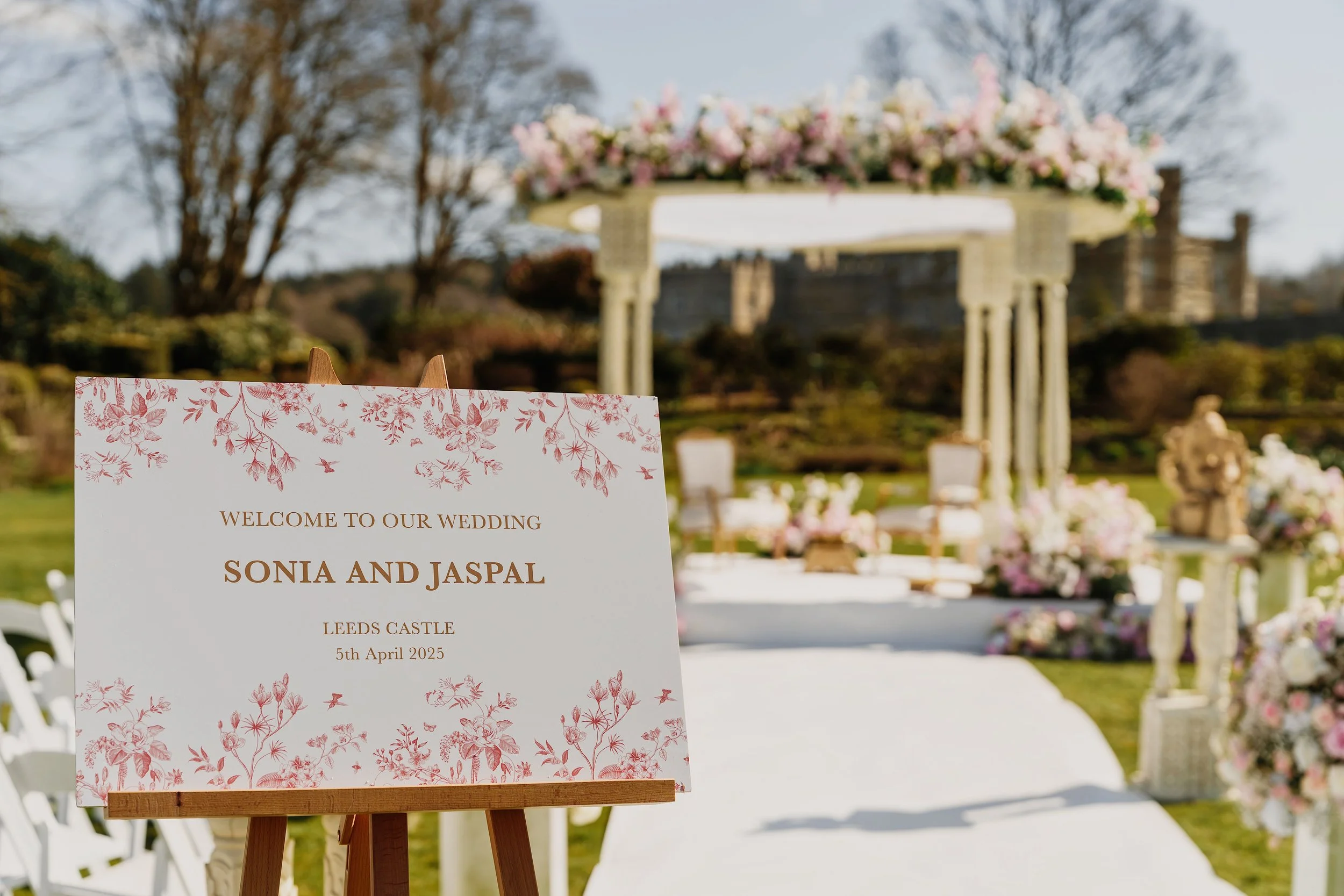
Photography by Rahul Khona
KNOW YOUR OPTIONS IF THE WEDDING IS CLOSE OR ALREADY PAST
Timing matters because it can affect how much weight an agreement carries. Signing at least 28 days before the ceremony is widely treated as sensible practice and forms part of the reforms being considered, although it isn’t currently a fixed legal requirement. The real issue is pressure. Nobody wants an agreement signed days before a wedding, when deposits have been paid and walking away from the ceremony feels almost impossible. Give yourselves months rather than weeks if you can.
If time is running out, a postnuptial agreement covers the same ground after marriage and is assessed on the same principles. This can make particular sense for couples marrying abroad or working with a compressed timetable. Stowe Family Law, recognised as a leading firm across the UK by the independent legal directory the Legal 500, explains what a postnup costs and how the process works. The postnuptial agreement cost is broadly comparable to a prenup because much of the drafting work is the same. A postnup isn’t a lesser document, so don’t rush a prenup simply to get it signed before the wedding.
CHOOSING THE RIGHT MOMENTS AND THE RIGHT WORDS
Talk to your partner before you talk to anyone else and choose a moment that has nothing to do with another wedding decision. The evening you’ve spent three hours comparing venues and dealing with family messages probably isn’t it.
Don’t expect to settle everything in one sitting. If your partner is hurt by the suggestion, resist the temptation to start explaining the legal merits straight away. Acknowledge their reaction, give the conversation some space and return to it later. A difficult first conversation doesn’t have to decide what happens next.
TALK ACROSS TWO SETS OF FAMILY EXPECTATIONS
Families bring their own assumptions into marriage. Some parents expect to be consulted on anything involving family property or a business built over generations. Others come from legal systems where marital property arrangements are standard, so a prenup barely raises an eyebrow. For some families, though, discussing divorce before the wedding can sound like a lack of faith in the marriage. Where mahr or another religious or customary provision forms part of the marriage, that should be discussed alongside the English agreement rather than treated as a replacement for it.
Before speaking to either family, agree together what they need to know and when. Then keep the approach consistent:
• Decide who speaks to whose parents rather than making one partner defend the other’s family.
• Present the prenup as a joint decision, not something the wider family gets to rewrite.
• Arrange an independent interpreter if a parent’s English is limited.
• Explain why you’re doing it before getting into the detail of what you want.
Family involvement shouldn’t become family control. Whatever the expectations on either side, the agreement belongs to the two people getting married.
HANDLE FAITH, CUSTOM AND OVERSEAS ASSETS IN THE AGREEMENT
A religious ceremony on its own doesn’t necessarily create a marriage recognised in England and Wales. Couples who have a nikah or another religious ceremony without a civil marriage can assume they have legal protection when they don’t, so it’s worth checking the position rather than assuming. Where there’s also a religious marriage contract, it can sit alongside an English agreement, with each document drafted in awareness of the other.
Overseas assets need particular attention too. Property abroad, an interest in an overseas family business or an inheritance governed by another legal system may require advice in both jurisdictions. Mirror agreements are sometimes appropriate. Raise international assets at the first appointment, as they can affect both the work involved and the timetable.
PUT THE AGREEMENT ON A FOOTING THAT WILL HOLD UP
The strength of a prenuptial agreement depends on more than what the document says. The circumstances in which you reach and sign it matter too. In practical terms, four points are particularly important:
• Both of you disclose your finances fully and frankly, including assets you regard as your own.
• Each of you takes independent legal advice from a separate solicitor.
• Neither person is put under pressure to sign.
• The advice each of you receives is recorded in writing.
Ask for a written estimate before instructing anyone. Postnup solicitor fees and prenup fees are usually quoted as a fixed price for a defined piece of work, with the amount depending on the complexity of your assets and how much negotiation is required. It’s also worth building in a review clause triggered by events such as the birth of a child, buying a house or reaching a set number of years. Life changes, and a good agreement should anticipate that.
APPROACHING THE CONVERSATION WITH CONFIDENCE
Keep the order simple: clarity first, then your partner, then your families, then the legal drafting. Done carefully, the prenup conversation can get you talking properly about money, property and family expectations before marriage rather than discovering those differences years later.
Where assets, businesses or family members are spread across more than one country, get advice early. The agreement can take weeks to negotiate properly, and the conversations around it may take longer. Starting sooner gives you both time to think, ask questions and reach an agreement without the wedding date doing the negotiating for you.
At Ananya Cards, we know that bringing two families, cultures and traditions together is one of the most special parts of planning a wedding. We hope this guide offers a useful perspective on one of the conversations that may come along the way.
Until next time,